

2026 Jersey Fabric Innovation: A Complete Guide to Moisture-Wicking Jersey Technology
In 2026, performance apparel is no longer just about style. Teams, clubs, and individual athletes now expect jerseys to feel lighter, dry faster, and stay comfortable under pressure. That is why moisture-wicking jersey technology has become one of the most important topics in modern sportswear.
For custom teamwear brands, fabric is no longer a background detail. It directly affects comfort, temperature control, durability, and even player confidence. In this guide, we break down how advanced sports fabric works, what is changing in 2026, and how to choose the best material for your next custom jersey order.
What Is Moisture-Wicking Jersey Technology?
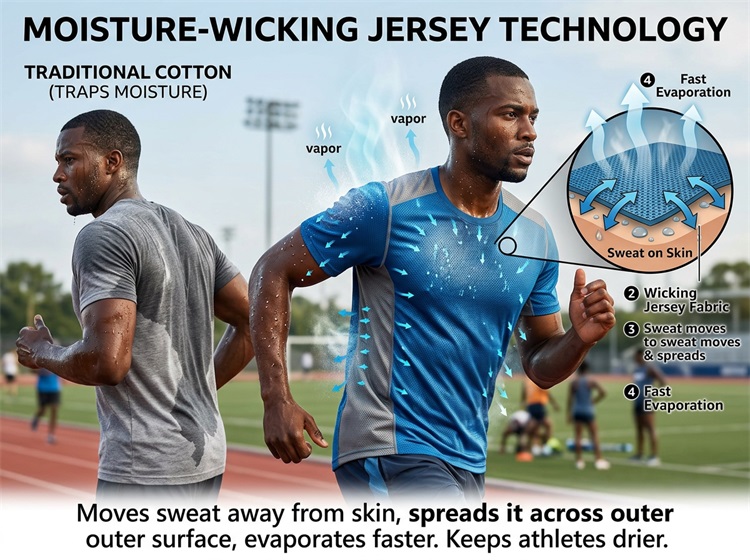
Moisture-wicking jersey technology refers to fabric engineering that moves sweat away from the skin and spreads it across the outer surface of the garment, where it can evaporate faster. Instead of trapping moisture like traditional cotton, modern jersey fabrics are designed to keep athletes drier during training and competition.
This is why moisture wicking fabric is now widely used in football jerseys, basketball uniforms, baseball tops, cycling kits, and training apparel.
How Modern Moisture Management Works
Most high-performance jerseys use synthetic or blended fibers such as polyester, nylon, or engineered microfiber. These materials are designed to support three performance functions:
- Pull sweat away from the skin
- Spread moisture across a larger surface area
- Speed up evaporation through airflow and fabric construction
In practical terms, this means a better on-body experience. A jersey that dries quickly feels lighter, reduces cling, and helps players stay focused.
What’s New in 2026 Jersey Fabric Innovation?
The biggest shift in 2026 is that brands are no longer selling “quick-dry” as a single feature. Instead, the market is moving toward multi-function jersey fabric technology that combines:
- Moisture management
- Breathability
- Lightweight stretch
- Odor control
- Better durability after repeated washing
Many newer fabrics also use improved knit structures, micro-channel yarns, and performance finishes to create more efficient sweat transfer. For buyers, this means today’s advanced sports fabric is more balanced than older generations of sportswear material.
Key Benefits of Moisture-Wicking Sportswear
Choosing moisture-wicking sportswear offers several practical advantages:
- Better comfort: Less sweat buildup means less stickiness and distraction.
- Faster drying: Quick evaporation helps jerseys feel lighter during intense play.
- Improved temperature regulation: Dry fabric supports a more stable body climate.
- Reduced chafing risk: Less trapped moisture can mean less irritation.
- Cleaner long-term wear: Many performance fabrics pair moisture control with odor-management features.
Moisture-Wicking Fabric vs Cotton vs Standard Polyester
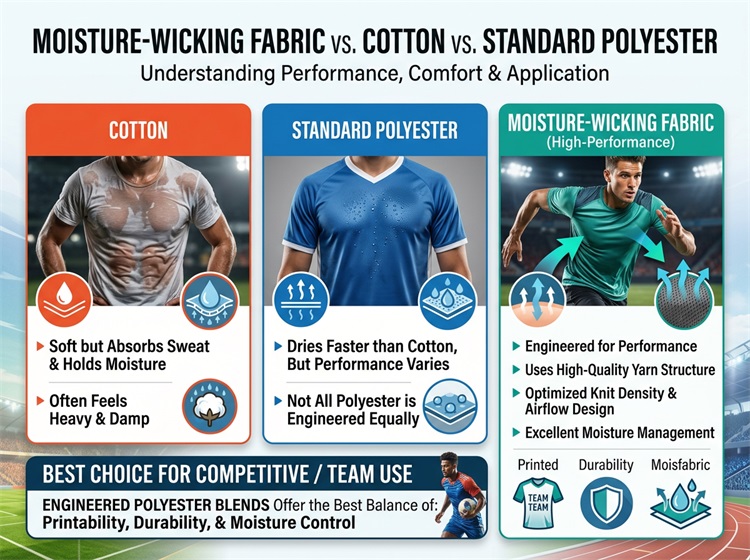
Cotton is soft, but it absorbs sweat and holds it. That often makes a jersey feel heavy and damp. Standard polyester dries faster than cotton, but not all polyester is engineered equally. High-quality quick dry fabric uses better yarn structure, knit density, and airflow design to improve performance.
For competitive or team-use jerseys, engineered polyester blends usually offer the best balance of printability, durability, and moisture control.
Best Fabric Choices by Sport
Different sports need different fabric priorities:
- Football and soccer: lightweight, breathable, durable for repeated movement
- Basketball: soft hand feel, airflow, quick drying
- Baseball: structure, durability, and comfort over long wear
- Training wear: stretch, sweat control, and easy care
For most custom orders, the best fabric for a sports jersey is one that combines breathability, moisture transfer, and reliable sublimation performance.
How to Choose the Right Custom Jersey Fabric
When comparing materials, ask these questions:
- Does the fabric dry quickly during high-sweat activity?
- Is it breathable enough for your sport and climate?
- Will it hold color and shape after repeated washing?
- Is it suitable for team customization and bulk production?
- Does it balance performance with budget?
For team buyers, the ideal fabric is not just technical. It must also support fit consistency, print quality, and long-term wear.
Final Thoughts
The future of teamwear is being shaped by smarter fabric choices. In 2026, moisture-wicking jersey technology is not a trend. It is the new standard for teams that care about comfort, performance, and professional presentation.
If you are sourcing custom uniforms, understanding advanced sports fabric can help you choose jerseys that look sharp, feel better, and perform harder from kickoff to final whistle.
At Fanscheer, this is exactly where better custom jersey decisions begin.